
 Magazine – Hot off the press
Excited to unveil the latest issue of our College of Engineering magazine!
Explore out-of-this-world research to see where the next-generation aerospace engineers will take us as we aim for the stars.
Student Profile – Arjun Sudheer
Growing up in his hometown of Cupertino, California, Arjun Sudheer, a rising talent in Software Engineering, is not only driven by academic pursuits, but also by a genuine passion for problem-solving and innovation.
Arjun’s fascination with software engineering began in his freshman year of high school when he first experimented with coding. Despite his initial challenges, Arjun found himself drawn to the intricacies of programming. He recalls the thrill of successfully coding his own games, like golf and a brick-breaker arcade game, which ignited his spark for coding.
His passion only deepened when he joined his school’s robotics club, where he discovered the real-world applications of software in bringing robots to life. From programming robots to performing the precise actions needed to optimize code for efficiency, Arjun found himself captivated by the reach of software engineering into the real world, not just on a screen.
 San Jose State University (SJSU) is recognized for our outstanding Engineering college and hands-on approach to education, so it was the perfect fit for Arjun’s aspirations. Our strong industry connections and vast undergraduate research opportunities further solidified his choice. In his first year alone, Arjun has actively engaged in multiple research programs, such as “Object Detection” and “Autonomous Car Security,” allowing him to gain experience and interact more closely with professors and masters students.
Arjun’s academic journey received a significant boost with the four-year Jane G. Evans Merit Scholarship. It not only alleviates financial stress but also fuels his motivation to excel further. With tuition fees covered, Arjun can focus wholeheartedly on his studies and pursue his academic and professional goals without the burden of financial worries that many college students struggle with.
Beyond academics, Arjun is deeply involved in his community. As a longtime member of the Boy Scouts of America, he has honed leadership skills and learned the value of giving back. He has volunteered in environmental cleanup initiatives and led service projects, including cooking a hot meal for homeless people.
Looking ahead, Arjun envisions a future where he can make a meaningful impact in the software industry. With a keen interest in artificial intelligence (AI) and cybersecurity, he aims to leverage his skills to contribute to advancements in these fields. In the age of AI, he is especially interested in ensuring online privacy and enhancing cybersecurity measures so everyone is protected and can browse the web safely.
Like most students, Arjun wonders how he compares to the rest of the class, wondering if his performance is good enough. However, with small achievements from his hard work, Arjun was able to see his full-class performance, which boosted his self-confidence and erased his doubts.
To those facing similar challenges or who are about to join college this fall, Arjun offers three simple but profound pieces of advice:
Embrace new experiences by joining clubs or organizations.
Persevere through setbacks- when you don’t know how to do something, don’t limit yourself because of it.
Believe in yourself that you can overcome these setbacks and good things will follow.
In Arjun Sudheer, we see not just a student, but a power of passion, perseverance, and community spirit. As he continues to chart his course in software engineering, one thing is certain—Arjun Sudheer is a name to watch out for in the world of technology and innovation.
CoE Students Chosen for Cisco Dream Team

Recently, four SJSU College of Engineering (CoE) students were invited to be a part of Cisco’s Dream Team. Bryan Pham, Khin San, Tritan To and Binh Vo took their Engineering Technology coursework to the next level by being chosen in a statewide search, and were recommended by lecturer, Richard Grotegut. These four individuals participated in setting up the network capabilities of a recent Salesforce event at the Moscone center in San Francisco, CA.
Each Dream Team project offers students the opportunity to learn while helping to build the networking infrastructure at large-scale events under the guidance of industry professionals. Past events have included international Cisco Live! events, NFL events such as the season opener kick-off game and Super Bowl, the Global Citizen Festival, The Open Championship, and other major events and conferences.
As members of the Dream Team, the fabulous four worked on setting up network devices such as routers, switches, access points, antennas, and wireless Local Area Networks (LAN) controllers. They ensured that the physical connections between the devices were correct and connected to the appropriate virtual LANs. Additionally, the team learned how the network engineers monitor device status, configured them, troubleshoot issues, and set up networks for keynote streaming.
“Embarking on a one-week internship at the Moscone Center for the Trailblazer TDX 2024 event with Straight Up Technologies was nothing short of a revelation,” said Bryan Pham. “As a proud member of the Dream Team, the experience was a symphony of innovation and hands-on learning.”
“I gained a clear idea of how professional networking teams function and the dynamics within such environments. It was a chance to see firsthand the inner workings of a technology company, which was eye-opening and inspiring,” commented Binh Vo.
Khin San added, “The next big thing for me is to continue expanding my skills and knowledge I have established through the Dream Team experience. I aim to pursue further hands-on opportunities and professional development, possibly exploring more about network engineering in event settings.”
The Dream Team opportunity certainly shattered the concept of what an Information Technology (IT) job is all about, proving that IT is not confined to desks, but thrives in a live event environment. Congratulations to the Fab Four and keep rocking those events!
AAPI Heritage Month

Image courtesy of Smithsonian magazine and IDEA.TED.COM
In honor of Asian American and Pacific Islander Heritage Month (AAPI), we aim to spotlight two innovations originating from Native Hawaiians. One enriches Hawaiian culture, while the other serves to safeguard its traditions.
Born in 1953 in Hawaii, Nainoa Thompson was deeply influenced by his Polynesian heritage, which revered the ocean as a source of sustenance, exploration, and connection. His journey into navigation began in the 1970s when he became a student of master navigator Mau Piailug from the tiny Micronesian island of Satawal. Under Piailug’s guidance, Thompson learned the intricate art of wayfinding, a traditional Polynesian method of navigating the seas using natural signs like the stars, waves, winds, and birds.
Thompson’s crowning achievement came with the development of the star compass, a tool that encapsulates centuries of Polynesian navigational knowledge into a portable and practical device. At its core, the star compass is a physical representation of the celestial sphere, allowing navigators to identify the positions of stars relative to their own location on the Earth’s surface.
It is made up of a circular wooden or stone board marked with cardinal directions and celestial reference points. By aligning specific stars with their corresponding points on the compass, navigators can determine their heading and track their course across the open ocean.
The key to the star compass’s effectiveness lies in the intricate understanding of celestial phenomena and their relationship to terrestrial navigation. Polynesian navigators like Thompson possess a deep knowledge of star patterns, celestial arcs, and the subtle nuances of the night sky, allowing them to navigate with astonishing accuracy over vast distances compared to regular compasses.
Joseph Kekuku, a Hawaiian musician that forever changed the landscape of music by inventing the steel guitar. Born in 1874 on the island of Oahu, Kekuku’s early years were steeped in the rich musical traditions of his native land. It was during his youth, that he stumbled upon this invention, some say he was experimenting with a steel bolt while others say he was playing with his comb, while the process was lost but the final product didn’t.
Kekuku refined his technique and developed what would become known as the steel guitar. Unlike its traditional counterpart, the steel guitar features raised strings and a metal bar or slide, allowing players to produce a distinctive sliding sound that evokes the mournful cries of the Hawaiian islands.
The steel guitar operates on principles similar to those of its acoustic counterpart, with strings vibrating to produce sound. However, the addition of a metal slide or bar enables players to vary the pitch and sustain of notes by sliding smoothly along the strings. This distinctive sliding technique, coupled with the instrument’s raised strings, lends the steel guitar its characteristic sound and sets it apart from conventional guitars.
Meet AI Expert from Silicon Valley! Tech Jobs, Layoffs, Cybersecurity! Ft. Prof. Ahmed Banafa
 Recently Professor Ahmed Banafa was interviewed by @Singh in USA, a software engineer with over 1 million subscribers on his YouTube channel. Covering all subjects regarding AI from its history, its operating system, how it is being used, and how it impacts so much in our daily lives now compared to the past.
 Spencer Vernon Guinther, a graduating senior from Pleasanton, California, has defied his own doubts to carve a path of determination and success in the field of engineering.
 On April 19th, students from Professor Vlad Ionescu’s Manufacturing Analysis and Management-Tech 147 class enjoyed a visit to Maxar Space Systems at the company’s Palo Alto headquarters, exploring the intricacies of advanced manufacturing processes within the aerospace industry. Spearheaded by Brett Deutscher, the Director of Assembly, Integration and Testing, the tour carefully examined production methodologies, interdisciplinary team dynamics, rigorous quality control measures, and safety protocols associated with stationary communication satellites. Additionally, students were treated to a presentation on the future of satellites by Maxar’s Vice President of Spacecraft Assembly, Integration, and Test.

 In the world of artificial intelligence, a new paradigm has emerged that is revolutionizing the way we approach AI system design and deployment. Objective-driven AI, as it is known, represents a fundamental shift in how we conceptualize and develop intelligent systems.

 Discover Prof. Ahmed Banafa’s insightful perspective on the current state of artificial intelligence and its ethical considerations. From addressing bias and fairness to envisioning the impact on the future job market, he provides comprehensive insights into AI’s challenges and opportunities, from recommendations for minimizing bias in AI algorithms, to effectively integrating AI into education. Professor Banafa offers a roadmap for navigating AI technology’s complex landscape.
  Meet Aryan Gaur, class of 2027 freshman who just started his journey here at San Jose State University (SJSU) as a Computer Engineering student. Growing up in San Ramon, Aryan isn’t the first in his family to pursue higher education, but he’s determined to make a significant impact with his chosen major. Inspired by his father’s experiences living in a rural Indian community that lacked healthcare resources, Aryan aims to leverage his engineering skills to bring about positive change. His goal? To develop solutions that address the pressing needs of underserved communities, like the impactful work of Zipline, a company that he admires for utilizing drone technology for medical supply distribution in Africa.

 As artificial intelligence (AI) continues to evolve, it has shown remarkable performance in narrow, well-defined domains such as image recognition, game-playing, and natural language processing. However, its ability to exhibit true creativity and excel at open-ended tasks remains largely unexplored. This area holds immense potential for pushing the boundaries of what AI systems can achieve. Although AI has made significant progress, the challenge of developing systems capable of open-ended creativity and versatility remains a formidable frontier. With ongoing research in AI for creativity, we can look forward to a future where AI can perform tasks previously thought impossible.
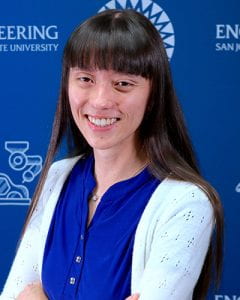 Meet Elizabeth Bremberg, a fourth-year Mechanical Engineering major with a Robotics Minor at San José State University (SJSU). Elizabeth’s journey into engineering was sparked by her early fascination with sciences. It was her involvement in a local Girl Scout robotics troop, the Space Cookies VEX Team, that ignited her passion for robotics and engineering.
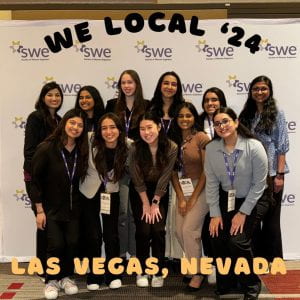 Established in 1950, the Society of Women in Engineering (SWE) is an international not-for-profit educational and service organization dedicated to advocating for women in engineering and technology. In 1978, San José State University officially recognized SWE as a club on campus.
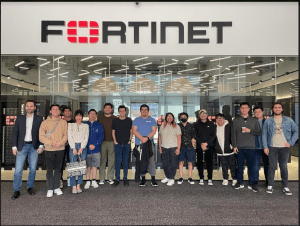 On Monday, March 18, 2024, students from San José State University’s (SJSU) Tech 165 Wireless Communication Technology class were invited to see the inner workings of Sunnyvale, California-based company, Fortinet, a leading provider of Cybersecurity and Mobile Security solutions.
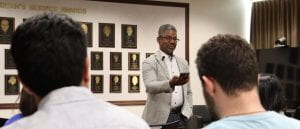 Insight, Engagement, and How to Shape Your Life and Society