Come support the Academic Affairs Division for a free afternoon of food, pregame activities, prizes and fun!
We hope to see you all there to take home the trophy.
Please RSVP here by Friday, February 2nd!

Come support the Academic Affairs Division for a free afternoon of food, pregame activities, prizes and fun!
We hope to see you all there to take home the trophy.
Please RSVP here by Friday, February 2nd!
The SJSU Policy for the Protection of Human Subjects in Research has been significantly revised to accommodate updated federal regulations which have gone into effect this year.
A summary of the changes is provided on the SJSU IRB website:
http://www.sjsu.edu/research/irb/irb-policies/index.html
The most significant change to the regulations is the expansion and clarification of exemption categories. A list of the exemption categories, how they apply to vulnerable groups, and the SJSU-specific consent requirements for each category are provided in the following Table of Exemption Categories (pdf).
The SJSU IRB has updated IRB forms and documents to reflect the policy changes and to improve the clarity of human subjects research proposals. Please make sure to use the most current forms posted on the Office of Research website when submitting a proposal to the IRB. Outdated IRB forms will no longer be accepted beginning this spring semester. A submission checklist is also available on the IRB website. Complete IRB proposal should now be submitted to irb@sjsu.edu. We have discontinued the requirement for paper submission.
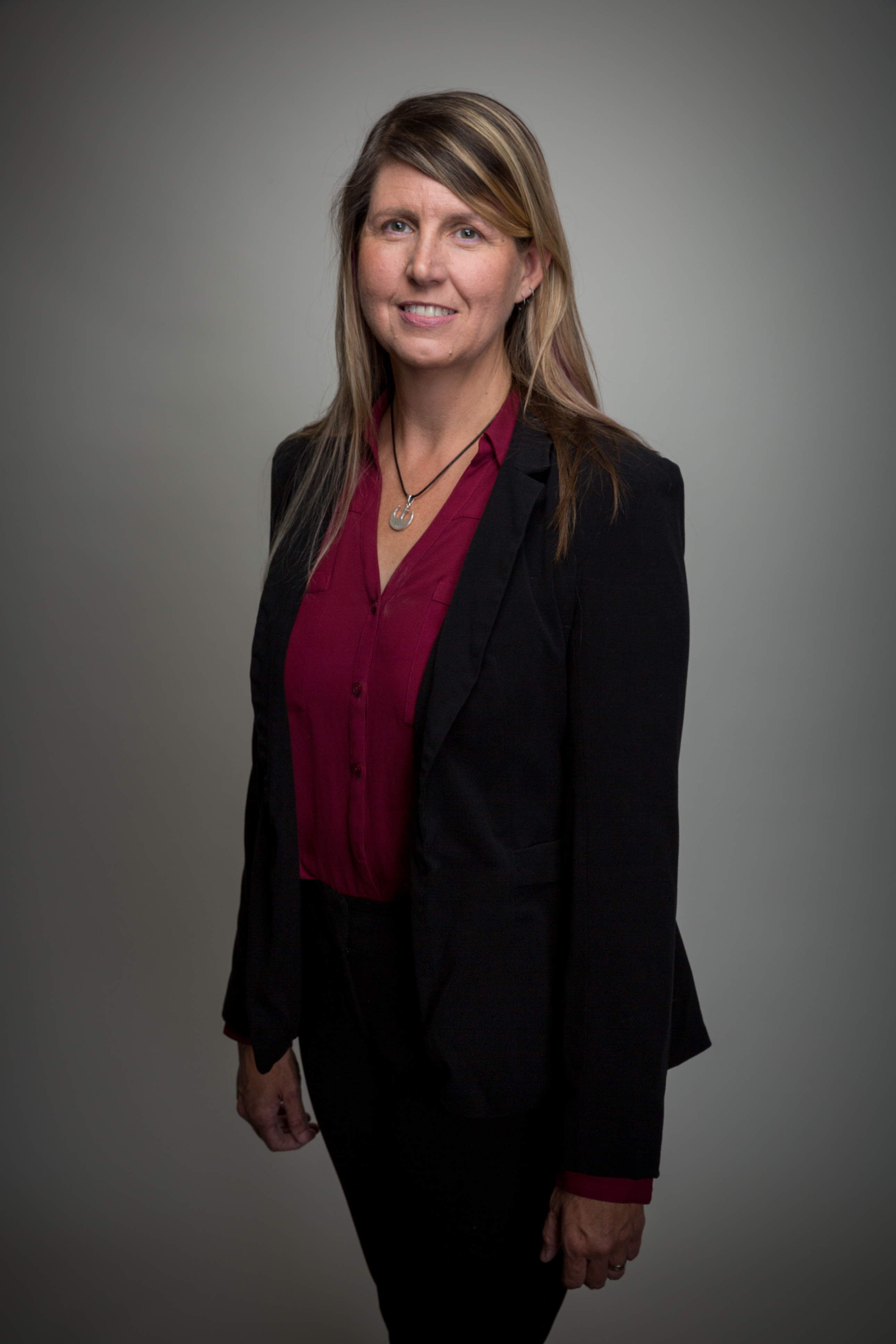
Janet Stemwedel
Janet D. Stemwedel, a professor and chair of the Department of Philosophy in the College of Humanities and the Arts has been elected to the rank of Fellow by the American Association for the Advancement of Science (AAAS). She is one of 396 AAAS members across disciplines to be awarded the distinction in 2017 and was recognized in the section on History and Philosophy of Science. Each year the Council of the AAAS elects members whose “efforts on behalf of the advancement of science or its applications are scientifically or socially distinguished.”
She joins an elite group of Fellows in a tradition that dates back to 1874. Among past Fellows are Maria Mitchell, who discovered a comet that now carries her name; inventor Thomas Edison; anthropologist Margaret Mead, and biologist James Watson. Earlier this year, five AAAS Fellows were named as 2017 Nobel laureates.
Stemwedel, who holds doctorate degrees in both chemistry and philosophy, was recognized for distinguished contributions to the philosophy of science and ethics, and for exceptional efforts to promote the public understanding of science and scientists in culture.
“It’s hard to imagine engaging in the work for which I’m being honored any place else but San José State,” Stemwedel noted. “I’ve been blessed here with colleagues and an academic environment that has fully supported both my interdisciplinary work and non-traditional activities like blogging, podcasts, and tweeting that bring my scholarship out of the ‘ivory tower’ and into contact with the wider world. As a philosopher who helps the public to understand scientists and scientists to understand the public, I’m working to build a future that’s more humane for everyone. I’m delighted to share this recognition with San José State.”
She shared some of her research in a 2016 University Scholars Series lecture in which she discussed the ethical dimensions of being a good scientist that extend beyond avoiding or responding to scientific misconduct.
“Scientific knowledge is the result of particular kinds of interactions between human scientists who are also interacting with the piece of the world they’re studying,” she said. “Once you have an activity that requires humans to interact with each other, ethics has to be part of the story.”
Stemwedel contributes to Forbes.com and has maintained blogs where she is able to engage with an audience of working scientists and students from different disciplines and countries who are at various stages of their careers.
“They tell me if they think I’m missing an important feature of their scientific interactions, or if they find my ethical prescriptions implausible,” she said. “My audience also brings new questions to my attention, whether they’re from breaking news stories or from issues they’re trying to work out in their own lives as scientists.”
The ultimate goal of her research is to find ways to help scientists do their jobs better and to successfully share their findings with nonscientists.
“There are lots of ways to use philosophical tools – like logic and conceptual analysis – to develop strategies to address challenges in the real world, and lots of different challenges for which having a philosopher – or a college graduate with a philosophy degree – on your team might make a difference,” she said.
San Jose State University’s Charles W. Davidson College of Engineering Aviation Program was recently ranked first on the West Coast and fourth in the nation by the Best Colleges website. The website ranks schools based on a variety of factors such as tuition, retention rates and the median starting salary for graduates.
The site acknowledges the history of SJSU’s Department of Aviation Technology, which was founded in 1936 when math students expressed a desire to study flight. During World War II, SJSU was one of 13 U.S. schools to become part of the Civilian Pilot Training Program. The department currently offers two bachelor’s programs – in Aviation and Industrial Technology – that allow students to specialize in operations, maintenance management, aviation management or professional flight.
Department Chair Fred Barez said the ranking is due to the achievements of faculty, staff and students, noting that students regularly participate in conferences and competitions across the country.
“They are our best ambassadors to promote and spread the word about our program to gain such national attention and recognition,” Barez said. “The department financially supports such student activities and I am very pleased to see the results.”
San Jose State University’s Aaron Romanowsky, an associate professor in the Department of Physics and Astronomy, revealed new research findings in a Jan. 1 article published in Nature. Romanowsky and his coworkers discovered that while bright new stars are formed at a rapid rate in new galaxies how quickly that rate slows is determined by the mass of the black hole at the center of the galaxy.
The idea that the mass of black holes affects the rate at which stars are formed throughout the lifespan of a galaxy has been around for decades, but the team with which Romanowsky worked discovered the first observational evidence that this is the case. The precise nature of the feedback from the black hole that quenches star formation remains uncertain, according to coauthor Romanowsky, who is also an astronomer at UC Observatories.
“There are different ways a black hole can put energy out into the galaxy, and theorists have all kinds of ideas about how quenching happens, but there’s more work to be done to fit these new observations into the models,” Romanowsky said.